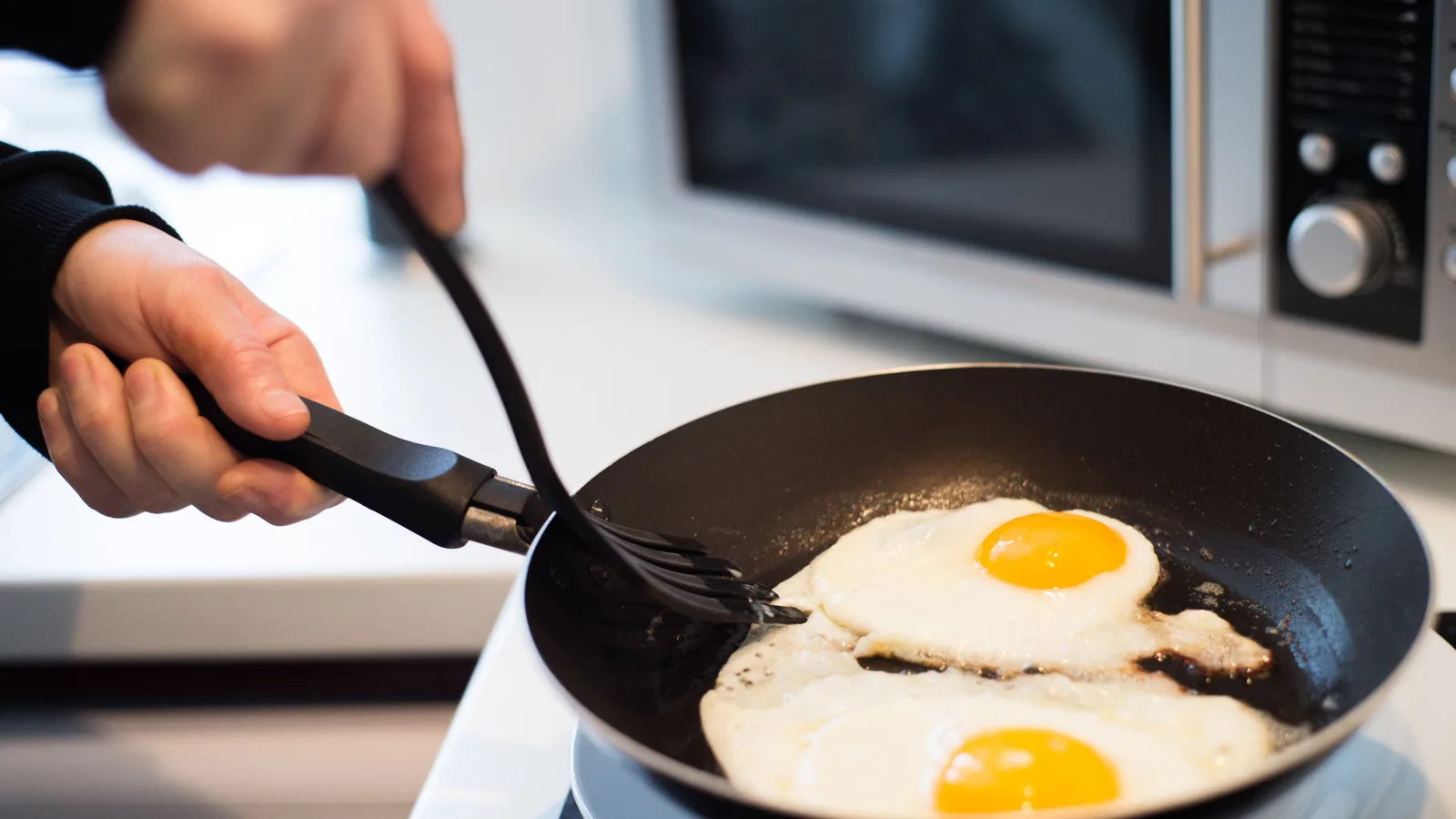
Best Frying Pans 2026: 5 Picks for Every Home Cook
Our pick of the best frying pans for 2026, from carbon steel and cast iron to non-stick and budget options, plus the buying criteria that matter.
The quick answer
A frying pan is one of the few pieces of kitchen kit that earns its space every day. The right choice depends less on a single 'best' label than on how you cook: whether you want quick non-stick release for eggs, a hot pan for browning meat, or a heavy pan that can go from hob to oven. This guide compares five widely available pans by material, cooking style and care, so you can match the pan to your hob and habits rather than buy the most expensive option on the shelf.
The 5 best frying pans for 2026
De Buyer Mineral B Pro 28cm Frying Pan
Best overall
A carbon-steel pan for cooks who want one hard-working pan for searing, frying and oven finishing. Carbon steel heats quickly and responds well to changes in temperature, and the surface becomes more naturally non-stick as seasoning builds. It is not a wipe-clean non-stick pan: it needs seasoning, thorough drying and a light oiling after washing. In return it is tough, tolerant of metal utensils and happy with high heat.
Why it wins
- Excellent for browning, searing and high-heat cooking
- Tough enough for metal utensils
- Oven-safe and suitable for induction hobs
- Improves with use as the seasoning develops
Watch out for
- Needs seasoning and careful drying to prevent rust
- Heavier than a basic non-stick pan
- Acidic dishes can strip the seasoning
Tefal Titanium Expertise 28cm Frying Pan
Best non-stick all-rounder
The practical everyday choice for eggs, fish, pancakes and quick weeknight frying. The titanium-reinforced non-stick coating gives reliable release and easy cleaning, and the 28cm size suits two to four portions. It is not a pan for brutal high heat or metal tools; treat the coating with care and it will do the simple jobs well. Check the base matches your hob before buying, especially on induction.
Strengths
- Reliable non-stick release for everyday foods
- Easy to clean by hand
- Comfortable handle and useful 28cm size
Weaknesses
- Coating has a finite lifespan
- Metal utensils and overheating shorten its life
- Not a substitute for carbon steel or cast iron when searing
IKEA 365+ Frying Pan 28cm
Best budget buy
A straightforward non-stick pan for student kitchens, holiday lets and anyone who wants a usable everyday pan without spending much. It is light, easy to handle and simple to replace when the coating eventually wears. It will not brown food as evenly as a heavier pan or last as long as a premium non-stick, but it covers basic frying, eggs and pancakes without fuss.
Strengths
- Low-cost route to a usable everyday pan
- Light and easy to handle
- Simple non-stick surface for basic cooking
Weaknesses
- Coating will not last as long as premium pans
- Less even heat at high temperatures
- Basic handle and finish
Lodge 30cm Cast Iron Skillet
Best cast-iron pan
A heavyweight pan for steaks, roast chicken, cornbread and dishes that go from hob to oven. Cast iron holds heat superbly, so it is excellent for a deep crust, and the pre-seasoned surface improves with use. It is heavy, slow to heat and needs drying and oiling after washing, but it is exceptionally durable and doubles as an oven dish.
Strengths
- Excellent heat retention for searing
- Oven-safe and versatile
- Very durable and works on induction hobs
Weaknesses
- Very heavy to lift and handle
- Slow to heat and slow to cool
- Needs drying and light oiling after washing
GreenPan Barcelona Pro 28cm Frying Pan
Best ceramic non-stick
A ceramic non-stick pan for cooks who prefer a lighter pan and a ceramic coating. It is good for eggs, pancakes and low-to-medium heat frying, with easy release when the coating is new. Like all ceramic non-stick, it is not a high-heat searing pan and the release will fade over time, so buy it for gentle everyday cooking rather than steak.
Strengths
- Good non-stick release at moderate heat
- Lighter than cast iron and easy to handle
- Useful alternative for ceramic non-stick fans
Weaknesses
- Not suitable for high-heat searing
- Coating lifespan is finite
- Can discolour with heavy use
How the picks compare
Everyday non-stick pans: Tefal, GreenPan and IKEA compared
Feature
Tefal Titanium Expertise
- Best for
- Everyday non-stick cooking
- Coating
- Titanium-reinforced non-stick
- Weight
- Light to moderate
- Care
- Hand wash, avoid metal utensils
- Main weakness
- Coating lifespan
GreenPan Barcelona Pro
- Best for
- Ceramic non-stick at moderate heat
- Coating
- Ceramic non-stick
- Weight
- Light to moderate
- Care
- Hand wash, avoid high heat
- Main weakness
- Coating lifespan and heat limits
IKEA 365+
- Best for
- Low-cost everyday frying
- Coating
- Standard non-stick
- Weight
- Light
- Care
- Hand wash, avoid metal utensils
- Main weakness
- Less even at high heat
Specialist pans: carbon steel and cast iron compared
Feature
De Buyer Mineral B Pro
- Best for
- Searing, oven finishing and long-term use
- Material
- Carbon steel
- Weight
- Moderate
- Oven use
- Oven-safe
- Care
- Season, dry thoroughly, oil lightly
- Main weakness
- Needs seasoning and careful drying
Lodge Cast Iron Skillet
- Best for
- High-heat searing and oven-to-table dishes
- Material
- Cast iron
- Weight
- Very heavy
- Oven use
- Oven-safe
- Care
- Dry thoroughly, oil lightly
- Main weakness
- Very heavy and slow to heat
Read the comparison as a guide to cooking style, not a league table. The Tefal and GreenPan are easy everyday pans but will not sear like carbon steel or cast iron. The De Buyer and Lodge reward a little care with better browning and far longer service lives. The IKEA pan makes the most sense when the priority is a low-cost pan for simple jobs.
How to choose a frying pan that lasts
Start with your hob. Induction needs a magnetic base; carbon steel and cast iron usually work, while many aluminium pans need a specifically induction-compatible base. If you are unsure, check the manufacturer's hob guidance before buying.
- Match the material to the job. Non-stick is for eggs, fish and delicate foods. Carbon steel and cast iron are for browning, searing and oven finishing. Stainless steel is versatile but needs fat and practice to stop sticking.
- Think about weight. A 28cm cast-iron pan is heavy even before food goes in. If you have wrist or shoulder problems, a lighter non-stick or carbon-steel pan is easier to live with.
- Choose a useful size. 28cm suits most households; 24cm is handier for one or two portions. A 30cm pan is good for family cooking but takes up more hob and cupboard space.
- Check oven safety. A pan that can go from hob to oven is useful for frittatas, roast chicken and pan sauces. Handles and coatings often set the limit, so check the maker's guidance.
- Accept that non-stick is consumable. No non-stick coating lasts forever. Buy the best coating you can justify, avoid metal tools and high heat, and replace the pan when the surface is scratched or releasing poorly.
- Heat responsiveness
- 4.5/5
- Carbon steel and thinner aluminium respond quickly; cast iron is slower but holds heat.
- Non-stick release
- 4.0/5
- Important for eggs and fish, but less important if you mainly sear meat.
- Durability
- 5.0/5
- Carbon steel and cast iron can last decades; non-stick coatings cannot.
- Comfort and weight
- 4.0/5
- A pan you can lift easily is more likely to be used every day.
- Hob and oven flexibility
- 4.5/5
- Induction compatibility and oven-safe handles widen what a pan can do.
The final recommendation
Frying pan FAQs
Can I use metal utensils in a non-stick frying pan?
Do I need a separate pan for induction hobs?
What is the most useful frying pan size?
How do I keep food from sticking to carbon steel?
Can non-stick pans go in the oven?
Related articles
Best Air Fryers 2026: 5 Picks for Every Budget and Size
Our pick of the best air fryers for 2026, from a compact Ninja to a family-sized Cosori, plus what to check on capacity, wattage and cleaning.
Best-of Lists
Best Bedding 2026: 5 Picks for Every Budget and Sleep Style
Our pick of the best bedding for 2026, from crisp cotton and hotel-style sateen to relaxed linen and budget-friendly sets, with clear buying advice.
Best-of Lists
Best Cookware Set 2026: 5 Picks for Every Home Cook
Five cookware sets worth the cupboard space in 2026, from stackable non-stick to uncoated steel, plus what to check before you buy.
Best-of Lists
Best Heated Blankets 2026: 5 Picks for Cosy UK Homes
Our guide to the best heated blankets for 2026, from cosy underblankets to washable throws, with clear picks for couples, solo sleepers and tight budgets.
Best-of Lists
Best Kettle 2026: 5 Picks for Every Budget and Style
We compare five of the best kettles for 2026 — a quiet budget jug, variable-temperature models and a design classic — plus what to check before buying.
Best-of Lists
Best Maternity Pillow 2026: 5 Picks for Side Sleepers
We compare five maternity pillows, from full-length U-shapes to compact support cushions, to help you sleep comfortably on your side.
Best-of Lists
Best Mattress Toppers 2026: 5 Picks for Every Budget
Five mattress toppers worth considering for UK beds, from a budget hollowfibre pick to a dual-firmness hybrid — plus how to choose the right one.
Best-of Lists
Best Non-Stick Frying Pans 2026: 5 Picks for Every Budget
Our pick of the five best non-stick frying pans for UK kitchens in 2026, from budget Scoville to Le Creuset, plus how to make the coating last.
Best-of Lists
Best Non-Stick Saucepans 2026: 5 Picks for Every Kitchen
Our pick of the best non-stick saucepans for 2026, from induction-ready everyday pans to ceramic and premium options, plus the checks that matter.
Best-of Lists
Best Nonstick Pots and Pans 2026: 5 Picks for Every Budget
Five non-stick pan sets and frying pans compared on coating, heat spread, oven safety and value — so you buy the right one first time.
Best-of Lists
Best Pillows for Side Sleepers 2026: 5 Picks for Neck Support
Five side-sleeper pillows that actually hold your neck in line, from adjustable memory foam to bouncy latex — and how to pick the right loft.
Best-of Lists
Best Mattress for Side Sleepers 2026: 5 Picks for Every Sleeper
Struggling with shoulder or hip ache? We compare five side-sleeper mattresses by feel, support, breathability and value for money in the UK.
Best-of Lists
Best toaster 2026: 5 picks for every kitchen and budget
A practical guide to the five best toasters for 2026, from the repairable Dualit to the clever Sage, plus what to look for before you buy.
Best-of Lists