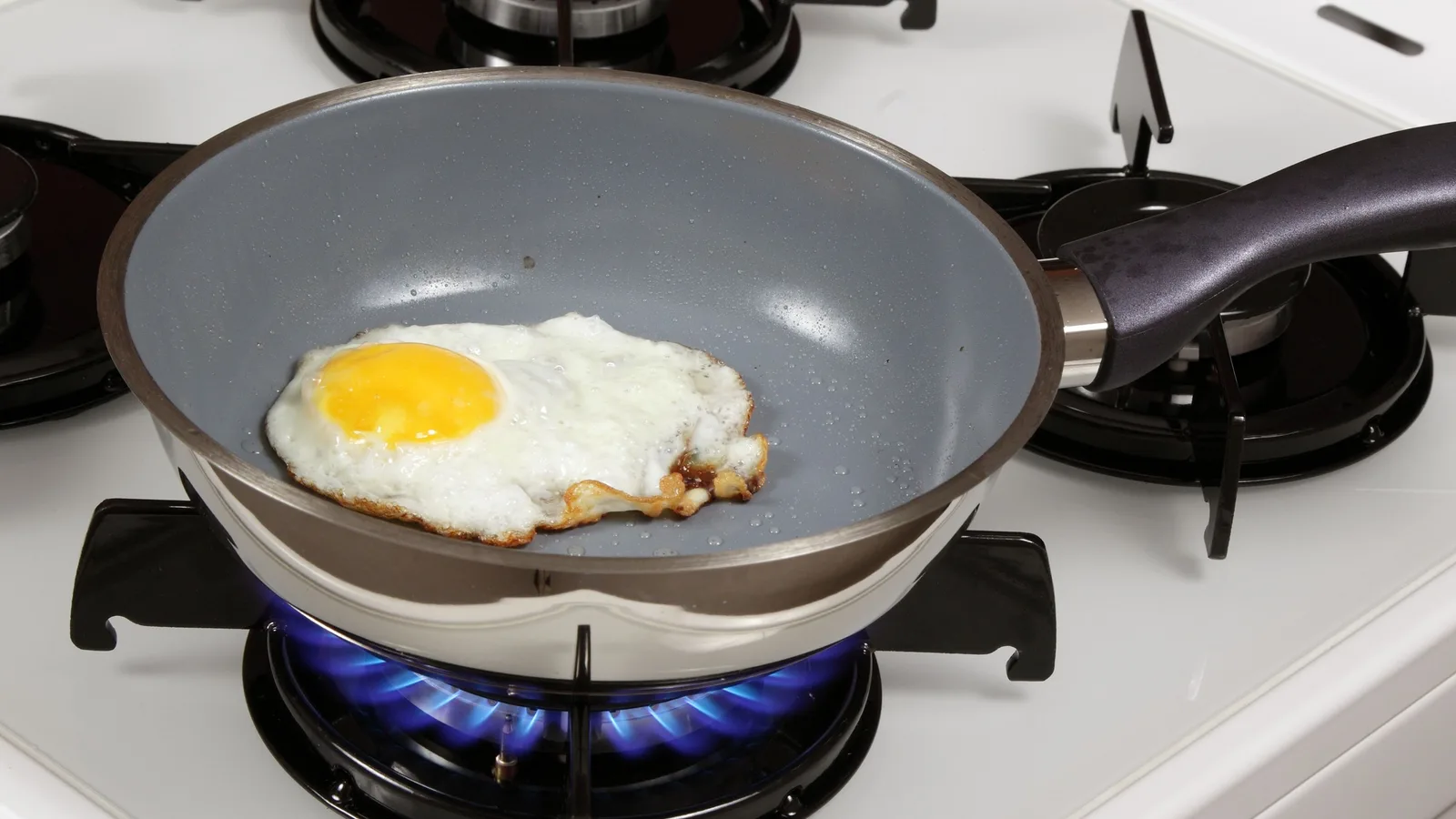
Best Non-Stick Frying Pans 2026: 5 Picks for Every Budget
Our pick of the five best non-stick frying pans for UK kitchens in 2026, from budget Scoville to Le Creuset, plus how to make the coating last.
The best non-stick frying pans for 2026
The frying pan is the hardest-working piece of kit in a British kitchen: eggs on a Sunday, a fast stir-fry on a Tuesday, pancakes when the mood takes you. It is also the pan most of us replace every few years, because a non-stick coating is a wear item rather than a lifetime purchase. That changes what you should be shopping for. A coating that keeps releasing food and a base that spreads heat evenly matter far more than a long list of features you will never use.
This shortlist covers the realistic options on sale in the UK right now: a do-everything workhorse, a genuinely cheap pan that still releases food properly, one that can go from hob to oven, a PFAS-free ceramic option, and a premium pan for people who cook every day. Each one is a 28cm frying pan, the size that suits most households — big enough for four eggs or a stir-fry for three, small enough to handle.
Picks are chosen on what each maker specifies, how the pan is meant to be used, and the price bracket it sits in. None of them is indestructible. Buy the one that matches how you actually cook, then look after it.
The quick answer: which pan for whom
- Best overall: Tefal Pro Metal 28cm. The most sensible all-rounder, with a hard-wearing coating and a heat indicator that helps you avoid the mistake that ruins most pans.
- Best value: Scoville Neverstick 28cm. Light, cheap and sold everywhere, with good release while it is new. The right first pan or second-kitchen pan.
- Best for hob-to-oven: Ninja Foodi Zerostick 28cm. A substantial pan you can start on the hob and finish in the oven, which makes frittatas and pan-roast chicken straightforward.
- Best ceramic: GreenPan Venice Pro 28cm. A PFAS-free coating that releases eggs and fish beautifully at medium heat.
- Best premium: Le Creuset Toughened Non-Stick 28cm. A thick, even-heating body that looks good enough to take to the table.
The five pans compared
Three of the shortlist compared on how they are meant to be used
What to compare
Tefal Pro Metal
- Best for
- Everyday family cooking
- Standout feature
- Thermo-Spot heat indicator and a coating sold as metal-utensil safe
- Main trade-off
- You pay more for the coating and the name
- Suits
- Anyone cooking most days who wants one pan to do everything
Scoville Neverstick
- Best for
- First pans and tight budgets
- Standout feature
- Very light, inexpensive, and sold in a wide spread of sizes
- Main trade-off
- Coating life is the shortest here
- Suits
- Students, renters and second kitchens
Ninja Zerostick
- Best for
- Hob-to-oven recipes
- Standout feature
- Oven-safe body and a stable, weighty feel on the hob
- Main trade-off
- Weight in the hand and space in the drawer
- Suits
- People who finish dishes in the oven
The ceramic and premium options, side by side
What to compare
GreenPan Venice Pro
- Best for
- PFAS-free cooking
- Standout feature
- Ceramic non-stick that releases eggs and fish cleanly
- Main trade-off
- Release fades sooner than a good PTFE coating
- Suits
- Medium-heat cooks: eggs, pancakes, fish, sauces
Le Creuset Toughened Non-Stick
- Best for
- A pan to keep for years
- Standout feature
- Thick hard-anodised body that heats evenly and looks smart on the table
- Main trade-off
- Premium pricing, and the weight that comes with a thick base
- Suits
- Anyone who cooks daily and wants one good 28cm pan
1. Tefal Pro Metal 28cm: best overall
Tefal Pro Metal 28cm Frying Pan
Best overall
Rating 4.5/5
The pan to buy if you want one that copes with everything from a fried egg to browning mince. The non-stick is a step up from Tefal's budget ranges and is sold as safe for metal utensils, so you are not hunting around for a silicone turner mid-cook. The hard-anodised body feels solid without being a workout, and the Thermo-Spot in the centre turns solid when the pan has reached the right temperature — genuinely useful if you tend to crank the ring to maximum out of habit. 28cm takes four eggs comfortably, two chops, or a stir-fry for three.
Why we rate it
- Thermo-Spot takes the guesswork out of preheating
- Coating is sold as metal-utensil safe
- Hard-anodised body feels sturdy but is still easy to handle
- Widely stocked, so replacing it later is simple
What to weigh up
- Costs noticeably more than a basic aluminium pan
- Heavier than the cheapest pans in the same size
- Hand washing is the sensible default if you want the coating to last
2. Scoville Neverstick 28cm: best value
Scoville Neverstick 28cm Frying Pan
Best value
Rating 4.0/5
Scoville's Neverstick range is the one to look at when the budget is the deciding factor, or when you need a pan for a student kitchen, a holiday let or a second home. It is light in the hand, heats quickly and releases food cleanly while it is new — which for many households is all a frying pan has to do. The range runs from small omelette pans up to large family sizes, so you can match the pan to your hob rather than the other way round.
Why we rate it
- Inexpensive enough to replace without wincing
- Light enough to toss vegetables one-handed
- Clean release for the first year or two of daily use
- Widely available, including sizes other ranges skip
What to weigh up
- The coating has the shortest life on this list
- The thin base can distort if you heat it hard and dry
- Not the pan to choose if you want to finish dishes in the oven
3. Ninja Foodi Zerostick 28cm: best for hob-to-oven
Ninja Foodi Zerostick 28cm Frying Pan
Best for hob-to-oven
Rating 4.3/5
Ninja's Zerostick pan is the one for anyone who reads a recipe that starts on the hob and ends in the oven. The body is oven-safe, so a frittata, a pan-roast chicken breast or a steak finished in the oven stays in the same pan — one less thing to wash and better results than transferring to a dish. It has a weightier, more planted feel than high-street basics, and the Zerostick coating is built for daily use rather than occasional frying.
Why we rate it
- Goes from hob to oven, turning a frying pan into a roasting tin
- Substantial body that sits still on the hob
- Coating designed for everyday use rather than occasional frying
- Riveted handle that stays comfortable during longer cooks
What to weigh up
- The heaviest pan of the five
- Bulkier handle takes more drawer space
- Pricier than the high-street basics
4. GreenPan Venice Pro 28cm: best ceramic
GreenPan Venice Pro 28cm Frying Pan
Best ceramic non-stick
Rating 4.2/5
If you specifically want to avoid PTFE, GreenPan is the name most people land on, and the Venice Pro is the sensible middle of its range. The ceramic coating is PFAS-free and gives a very clean release to delicate things — eggs slide, fish skin stays intact, pancakes come away without a fight. It is happiest at medium heat, which is how most of us should be frying anyway. Treat it with a little fat and wooden or silicone tools and it is a pleasure to use.
Why we rate it
- Ceramic coating with no PFAS
- Excellent release for eggs, fish and pancakes
- Copes with a bit more heat than a PTFE pan without the fume worry
- Looks good enough to bring to the table
What to weigh up
- Release fades faster than a good PTFE coating, especially with hard heat
- Needs a little oil or butter — it is not a dry-fry pan
- Not for metal utensils
How to choose a non-stick frying pan
- Coating first. This is what you are actually buying. A mid-priced pan with a good coating beats a cheap pan with a thick base every time.
- Base material and thickness. Aluminium heats fast but can warp; hard-anodised or steel-based bodies hold their shape and spread heat more evenly. A thin pan will always hot-spot.
- Check your hob. Induction rings need a magnetic base — look for the coil symbol on the box or the base itself. Gas and electric rings will take almost anything.
- Size. 24cm is right for two people, 20cm for eggs and single portions, 28cm for families and stir-fries. Buy the pan that matches your hob ring, not the one on offer.
- Handle and balance. You will lift it one-handed with food in it. A stay-cool, riveted handle and a pan that balances near the joint matter more than they sound.
- Oven and dishwasher ratings. Useful, not essential. Dishwasher tablets and hot cycles are hard on any coating, so hand washing is the kinder option even when the pan is rated for the machine.
- Coating quality and release
- 5.0/5
- The whole point of the pan. A coating that lets go cleanly for longer beats every other feature.
- Base and heat spread
- 4.5/5
- A thin base hot-spots and warps; a thicker one is calmer with eggs, sauces and meat.
- Hob compatibility
- 4.5/5
- Induction hobs need a magnetic base. Check the symbol before you buy — an aluminium pan without a steel insert simply will not heat.
- Weight and handle
- 4.0/5
- You will lift it one-handed with food in it, so balance and a stay-cool handle count.
- Oven and dishwasher ratings
- 3.5/5
- Nice to have rather than essential. Dishwasher tablets shorten the life of any coating.
How to make the coating last
- Heat on medium and let the pan come up to temperature gradually. Blasting an empty pan is the fastest way to kill the coating.
- Use a little butter or oil even with a good non-stick surface — it protects the coating and improves browning.
- Wooden, silicone or plastic tools unless the maker specifically says metal is fine.
- Wash by hand in warm soapy water once the pan has cooled. A sudden cold rinse on a hot pan can warp the base.
- Stack pans with a tea towel or felt protector between them; rims scratch coatings.
- Replace the pan when eggs start catching whatever you do, or when you can see scratches down to the metal underneath.
The verdict
Non-stick frying pan questions, answered
Can I use metal utensils in a non-stick pan?
Is ceramic non-stick better than PTFE?
Will a non-stick pan work on an induction hob?
Do I need to season a non-stick pan?
When should I replace a non-stick pan?
Related articles
Best Air Fryers 2026: 5 Picks for Every Budget and Size
Our pick of the best air fryers for 2026, from a compact Ninja to a family-sized Cosori, plus what to check on capacity, wattage and cleaning.
Best-of Lists
Best Bedding 2026: 5 Picks for Every Budget and Sleep Style
Our pick of the best bedding for 2026, from crisp cotton and hotel-style sateen to relaxed linen and budget-friendly sets, with clear buying advice.
Best-of Lists
Best Cookware Set 2026: 5 Picks for Every Home Cook
Five cookware sets worth the cupboard space in 2026, from stackable non-stick to uncoated steel, plus what to check before you buy.
Best-of Lists
Best Frying Pans 2026: 5 Picks for Every Home Cook
Our pick of the best frying pans for 2026, from carbon steel and cast iron to non-stick and budget options, plus the buying criteria that matter.
Best-of Lists
Best Heated Blankets 2026: 5 Picks for Cosy UK Homes
Our guide to the best heated blankets for 2026, from cosy underblankets to washable throws, with clear picks for couples, solo sleepers and tight budgets.
Best-of Lists
Best Kettle 2026: 5 Picks for Every Budget and Style
We compare five of the best kettles for 2026 — a quiet budget jug, variable-temperature models and a design classic — plus what to check before buying.
Best-of Lists
Best Maternity Pillow 2026: 5 Picks for Side Sleepers
We compare five maternity pillows, from full-length U-shapes to compact support cushions, to help you sleep comfortably on your side.
Best-of Lists
Best Mattress Toppers 2026: 5 Picks for Every Budget
Five mattress toppers worth considering for UK beds, from a budget hollowfibre pick to a dual-firmness hybrid — plus how to choose the right one.
Best-of Lists
Best Non-Stick Saucepans 2026: 5 Picks for Every Kitchen
Our pick of the best non-stick saucepans for 2026, from induction-ready everyday pans to ceramic and premium options, plus the checks that matter.
Best-of Lists
Best Nonstick Pots and Pans 2026: 5 Picks for Every Budget
Five non-stick pan sets and frying pans compared on coating, heat spread, oven safety and value — so you buy the right one first time.
Best-of Lists
Best Pillows for Side Sleepers 2026: 5 Picks for Neck Support
Five side-sleeper pillows that actually hold your neck in line, from adjustable memory foam to bouncy latex — and how to pick the right loft.
Best-of Lists
Best Mattress for Side Sleepers 2026: 5 Picks for Every Sleeper
Struggling with shoulder or hip ache? We compare five side-sleeper mattresses by feel, support, breathability and value for money in the UK.
Best-of Lists
Best toaster 2026: 5 picks for every kitchen and budget
A practical guide to the five best toasters for 2026, from the repairable Dualit to the clever Sage, plus what to look for before you buy.
Best-of Lists