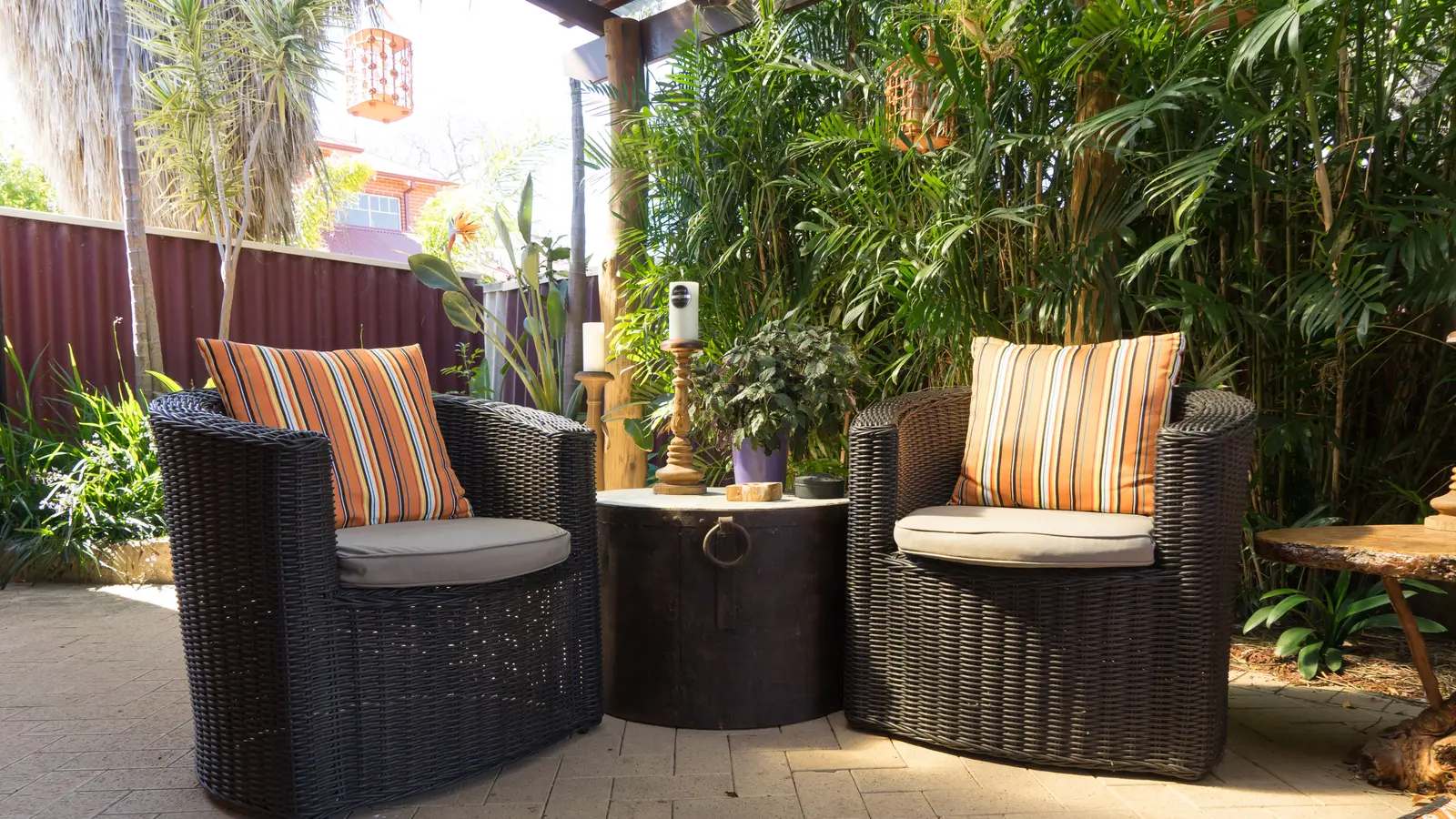
How to clean garden furniture: 6 steps to a fresh set
A practical, material-by-material guide to cleaning garden furniture: the soapy-water method, shifting green algae, and the mistakes to avoid.
The short answer
Most garden furniture needs nothing more than warm water, a squirt of washing-up liquid and a soft brush. Work from the top down, rinse with clean water and let everything dry completely before cushions go back on.
The two things that do the most damage are too much water and too much force. A pressure washer strips paint, raises the grain on timber and pushes water into joints and cushion foam, where it sits and turns green. Where the frame is already filmed with algae or speckled with mould, treat those patches with white vinegar, then wash and rinse as normal.
What you need before you start
Gather everything first so you are not leaving soap to dry while you hunt for a brush:
- A bucket of warm water and a few drops of washing-up liquid (not washing powder, not bleach)
- A soft-bristled brush — an old washing-up brush or a car cleaning brush is ideal
- A sponge and a couple of microfibre cloths
- An old toothbrush for joints, feet and woven backs
- White vinegar for algae and mould, bicarbonate of soda for scuffs
- A hosepipe on a gentle setting, or a watering can, for rinsing
- An old towel to catch drips and gardening gloves if you are scrubbing overhead
Step by step
1. Clear the furniture and brush off the dry debris
Take off cushions, parasols, loose glass tops and anything sitting on the table. Brush the whole piece down dry — leaves, cobwebs, dry soil and bird mess lift off far more easily dry than wet, and you avoid smearing mud into the grain or the weave.
2. Identify each material and test a hidden patch
Many sets mix materials: an aluminium frame, a synthetic weave, a glass top, timber arms. Treat each separately. Test your soapy water or vinegar mix somewhere out of sight — under a seat, behind a leg — and give it a few minutes to make sure the colour does not lift or the finish cloud over.
3. Wash from the top down with warm soapy water
Dip the brush or sponge in warm water with a small squirt of washing-up liquid, and work downwards so the dirty water runs onto parts you have not reached yet. Use the toothbrush around joints, feet and the gaps in woven backs. Keep it damp rather than soaked: a wet brush and a wipe shift most marks.
4. Treat algae, mould and stubborn marks
For a green film, mix white vinegar with an equal amount of water, apply with a cloth or brush, leave a few minutes and scrub lightly. For scuffs on plastic and metal, a paste of bicarbonate of soda and water lifted off with a cloth works well. Bird mess and tree sap soften if you lay a wet cloth over them for a few minutes first.
5. Rinse with clean water
Rinse everything with a hosepipe on a gentle setting or a watering can, working top down again. Soap residue is mildly sticky and attracts dust and spores, so rinse until the water runs clear and there are no suds left in joints, feet or under the table rim.
6. Dry thoroughly before use or storage
Stand chairs upside down or on their sides where possible, and tilt table tops so water runs off instead of sitting in recesses. Let the set air-dry for a few hours in the sun before cushions go back. Never stack or cover damp furniture — trapped moisture is exactly what turns a clean set green again.
Which cleaner for which material
Match the method to the material before you start scrubbing
Material
Wash with
- Oiled hardwood (teak, acacia, eucalyptus)
- Warm soapy water and a soft brush along the grain; re-oil when fully dry if the surface looks parched
- Painted or stained wood
- Mild soapy water, quick rinse, dry immediately
- Aluminium frames
- Warm soapy water and a cloth, then a good rinse
- Wrought iron and steel
- Soapy water, dry thoroughly, then treat rust spots and touch in paint
- Plastic and resin
- Soapy water and a soft brush; bicarbonate paste for scuffs
- Synthetic rattan and weave
- Soft brush, gentle rinse, air-dry
- Natural rattan and cane
- A barely damp cloth, minimal water, dried away from direct heat
- Fabric cushions
- Follow the care label; mild detergent, hand rinse, dry upright
- Glass tops
- Warm soapy water and a cloth, then a squeegee or dry cloth
Avoid
- Oiled hardwood (teak, acacia, eucalyptus)
- Pressure washers, bleach, and water left pooling on the surface
- Painted or stained wood
- Soaking, abrasive pads, and harsh patio cleaners that lift paint
- Aluminium frames
- Bleach and cream cleaners, which can pit and dull the finish
- Wrought iron and steel
- Leaving it wet, and wire wool that leaves steel fragments to rust
- Plastic and resin
- Scouring pads and gritty cream cleaners, which dull the surface
- Synthetic rattan and weave
- Pressure washers, which can lift and fray the weave
- Natural rattan and cane
- Hosing down, soaking, and leaving it out in the rain
- Fabric cushions
- Machine washing unless the label allows it, and storing damp
- Glass tops
- Abrasive pads, gritty sponges and anything that traps grit
Wooden furniture: the material that punishes mistakes
Timber is the most forgiving material to look at and the least forgiving to clean badly. Soapy water and a soft brush, worked along the grain, will lift most grime. Keep the piece damp rather than wet, and rinse quickly so the water does not sit in end grain, joints or the recesses where the legs meet the seat.
Silver-grey weathering on teak and small surface cracks are normal, not dirt, and no amount of scrubbing will remove them — a coat of suitable hardwood oil once the timber is completely dry will bring the colour back. If a mark will not shift, fine sandpaper used along the grain will take it out, but go carefully: sanding a painted or stained piece will leave a visible patch. Never aim a pressure washer at timber; it erodes the softer grain, opens the joints and strips any finish in seconds.
Metal, plastic and woven frames
Metal frames are straightforward unless the coating is damaged. Wash with soapy water, rinse well and dry, then look closely at any chips and scratches: bare metal left damp will rust, so treat spots early and touch in the paint. Avoid bleach and abrasive cream cleaners on aluminium, which can dull and pit the surface.
Plastic and resin sets come up quickly with soapy water and a soft brush. Faded or chalky plastic will not be restored by scrubbing, and aggressive scouring pads only make the dulling worse. For woven furniture, the key is a soft brush and a gentle rinse with the weave tilted so water runs off. Use the toothbrush in the gaps of woven backs, where dust and algae collect and where a pressure washer would fray the strands.
Cushions, parasols and fabric
Read the care label before anything else. Most outdoor cushion covers are spongeable rather than washable: brush off loose dirt dry, then sponge with a mild detergent solution, rinse with a clean damp cloth and dry upright so water can drain. If the label permits removing the covers, follow its temperature and drying instructions exactly — outdoor fabrics often should not be tumble dried.
Mould on fabric looks like dark speckling and smells musty. A dilute white vinegar solution applied to the spot, followed by a rinse and a good dry in the sun, deals with most early mould. The larger lesson is about storage: cushions put away even slightly damp will come out of the box in spring with mildew that never fully goes. Parasols should be cleaned open on a dry day, allowed to dry fully, and stored closed and dry.
Green algae, mould and lichen
A green film on furniture is algae, and it grows wherever water sits and air does not move. Vinegar is the gentlest effective treatment: dilute it roughly half and half with water, apply, leave a few minutes and scrub with a soft brush. For lichen — the flat, crusty patches on timber and stone — soften it with a wet cloth, scrape it gently with a plastic scraper and treat the residue with vinegar.
Persistent green on paving beneath the furniture is a different job and usually needs a dedicated patio cleaner used exactly as the label says. Keep those products off the furniture itself unless the label covers it.
What commonly goes wrong
- Too much soap. Suds left in joints dry to a sticky film that attracts dust. Rinse longer than feels necessary.
- A pressure washer used everywhere. It is the single most common way to wreck a set: raised grain on timber, frayed weave, stripped paint, water forced into frames.
- Cleaning in full sun. The solution dries before it is rinsed and leaves streaks, especially on glass and dark metal.
- Soaking timber. Puddles on the surface and water in the joints cause warping, splitting and mould. Damp cloth, not bucket, on wood.
- Wire wool on metal. Microscopic steel fragments stay behind and rust, leaving brown speckles in a few weeks.
- Cream cleaner on plastic. It scours the surface and leaves a permanently dull, chalky patch.
- Reassembling wet. Cushions on a damp frame, or covers over a damp set, undo the whole job.
Keeping it cleaner for longer
A five-minute routine beats an afternoon of scrubbing in spring:
- Brush or wipe down the set every couple of weeks through the season, so algae never gets a foothold
- Tilt table tops slightly or check that drainage holes are clear so rainwater runs off rather than pooling
- Bring cushions in after use and store them dry and ventilated, never in a sealed plastic bag
- Use a breathable cover rather than a plastic sheet, which traps condensation underneath
- Sweep leaves off seats and around the feet, since damp leaf litter is where green growth starts
- Re-oil hardwood once a year, and touch in chips on metal the moment you spot them
- Move furniture out of the worst of the winter weather if you can, or store it dry and raised off the ground
Frequently asked questions
Can I use a pressure washer on garden furniture?
How often should garden furniture be cleaned?
Will washing-up liquid damage garden furniture?
What kills green algae on garden furniture without bleach?
Can I clean mould off cushions myself?
Do I need to take furniture apart to clean it?
Related articles

How to choose a couch: 6 steps to a sofa you'll keep
Measure the room and the route in, test the seat properly and check the frame before you buy — a practical UK guide to choosing a couch.
Step-by-Step Guides
How to clean a barbecue: a spotless result in 7 steps
A simple step-by-step guide to cleaning your barbecue safely, from degreasing the grates to protecting the burners and stopping rust.
Step-by-Step Guides
How to clean a rug: 6 steps to a fresher, softer floor
A practical UK guide to cleaning rugs at home: how to vacuum, spot-clean and wash wool, synthetic and natural-fibre rugs, then dry them without damage.
Step-by-Step Guides
How to clean an air fryer: a 6-step routine that works
A step-by-step guide to cleaning an air fryer: how to wash the basket, tackle the heating element and avoid the mistakes that ruin the coating.
Step-by-Step Guides
How to Hang Curtains: Straight, Even Folds Every Time
Measure, fit the pole and hang curtains so they fall straight and even, plus fixes for dragging hems, gaps at the edges and stubborn folds.
Step-by-Step Guides
How to Make a Room Cosy: Warmth, Light and Texture
Make any room feel cosy with layered warm lighting, soft textures, fuller curtains and seating pulled close together — eight practical steps.
Step-by-Step Guides
How to measure for a sofa: get the fit right first time
Measure your room, your delivery route and the sofa itself before you buy. A practical UK guide to getting sofa dimensions and clearances right.
Step-by-Step Guides
How to remove scratches from wood furniture in 5 steps
Most scratches sit in the finish, not the wood. A practical, step-by-step guide to wax filling, blending and refinishing marks on UK furniture.
Step-by-Step Guides
How to season a cast iron pan: 5 steps to a non-stick finish
Season a cast iron pan properly: how to clean it, which oil to use, oven temperature, the five steps and how to fix a sticky or flaking finish.
Step-by-Step Guides