Air fryer vs oven 2026: which is better for your kitchen?
Air fryer vs oven compared on speed, capacity, results and running costs. We name the overall winner and explain which one suits your kitchen.
Air fryer vs oven: the short answer
An air fryer is not a magic oven, and an oven is not an overgrown air fryer. They use the same idea — moving hot air — at very different scales, and that scale is what decides which one suits your cooking.
This guide compares them on the things that actually change your mind at the till: speed, capacity, results, running costs, space and cleaning. No spec-sheet padding.
What actually differs between them
Both appliances cook with moving hot air. The difference is size. An air fryer is a compact convection oven with a strong fan and a heating element close to the food, which is why chips and breaded items brown so quickly. A fan oven pushes the same hot air around a much larger cavity, so food sits further from the element and the heat is spread more gently.
That one difference explains most of the trade-offs:
- Small cavity, fast heat. There's little air to warm, so an air fryer is ready in a minute or two.
- Close heat, crisp surface. The element sits just above the basket, so the surface of the food dries and browns quickly.
- Big cavity, even bake. A full oven holds a steady temperature across shelves, which is what cakes and bread need.
- Room to spare. A 60cm oven takes two trays at once; most air fryers cook a single layer.
One nuance worth knowing: oven-style air fryers with a door and wire shelves behave more like small ovens than drawer models and bake noticeably better. Drawer models are quicker and easier to shake mid-cook.
Head to head: where each one wins
Here's how the two compare on the points that decide most purchases.
Where each appliance wins for everyday cooking
What matters
Air fryer
- Heating up
- Little or no preheating; the small cavity is ready in minutes
- Cooking for one or two
- Ideal: quick, energy-light and easy to judge by eye
- Cooking for a family
- Tight — you'll cook in batches unless you buy a large dual-drawer model
- Chips and breaded food
- Excellent: close, fast-moving hot air gives a crisp shell
- Cakes, bread and pastries
- Doable in oven-style models, but limited by tin size and fierce top heat
- Sunday roast
- A whole chicken fits in the biggest models, but there's no room for the trimmings
- Cleaning
- Basket and crisper plate, usually dishwasher-safe
- Space
- Uses worktop and needs clearance behind for the vent
- Buying cost
- Lower upfront, even for a good mid-range model
- What it can't do
- No hob, no grill element, no proving setting
Oven
- Heating up
- Needs a good ten minutes or more to come up to temperature
- Cooking for one or two
- Works, but you're heating a large space for a small meal
- Cooking for a family
- Comfortable: two shelves and wide trays
- Chips and breaded food
- Good on fan mode; the lower shelf browns less evenly
- Cakes, bread and pastries
- Reliable and even; takes full-size tins
- Sunday roast
- The natural fit: meat, potatoes and veg all at once
- Cleaning
- Shelves, trays, door glass and the cavity itself
- Space
- Built in, so it costs you no worktop at all
- Buying cost
- Higher, especially built-in ovens and range cookers
- What it can't do
- Very little — it's the most versatile box in the kitchen
Speed, energy and running costs
Speed is the air fryer's strongest card. With so little air to heat, most models are ready in a couple of minutes and plenty of recipes need no preheating at all. A fan oven has to bring a large cavity up to temperature first, and that's time you spend leaning on the worktop.
Energy use follows the same logic. Heating a small drawer for a quarter of an hour takes less energy than heating a full oven for the same job, which is why an air fryer often works out cheaper for a portion of chips or a couple of chicken breasts.
The advantage shrinks the moment you're cooking for a family. Three batches in an air fryer can take as long, and use as much energy, as one tray in the oven. And if the oven is already running for a roast, put the sides in with it rather than firing up a second appliance.
Capacity: how much food really fits
Capacity is where most buyers get caught out. A standard drawer air fryer holds enough for one or two hungry people: a couple of portions of chips, four chicken thighs, a small tray of vegetables. Large dual-drawer and oven-style models stretch to three or four, but you're giving up a serious amount of worktop to get there.
A full oven is in a different league. Two shelves, wide trays and enough height for a tin, a casserole or a whole bird with the potatoes round it. If you regularly cook for four or more, or you like leftovers for tomorrow, the oven does work an air fryer can only manage in relays.
Be honest about your average week. If most meals are for two, an air fryer copes comfortably. If batch cooking, meal prep and a full Sunday lunch are normal, the oven earns its keep.
Results: crispness, baking and roasting
Chips are the test most people care about, and the air fryer wins it. The close, fast air gives a crisp shell and fluffy middle using a fraction of the oil a chip pan needs. Breaded fish, halloumi, roast cauliflower and reheated leftovers all come out well, and chicken wings and thighs brown properly.
Baking belongs to the oven. Cakes, bread, Yorkshire puddings and pastry need steady all-round heat and space to rise; a drawer air fryer gives you fierce top heat and a small tin. Oven-style models with a shelf do better, and a small batch of fairy cakes or a single loaf is achievable, but a full oven is simply more dependable.
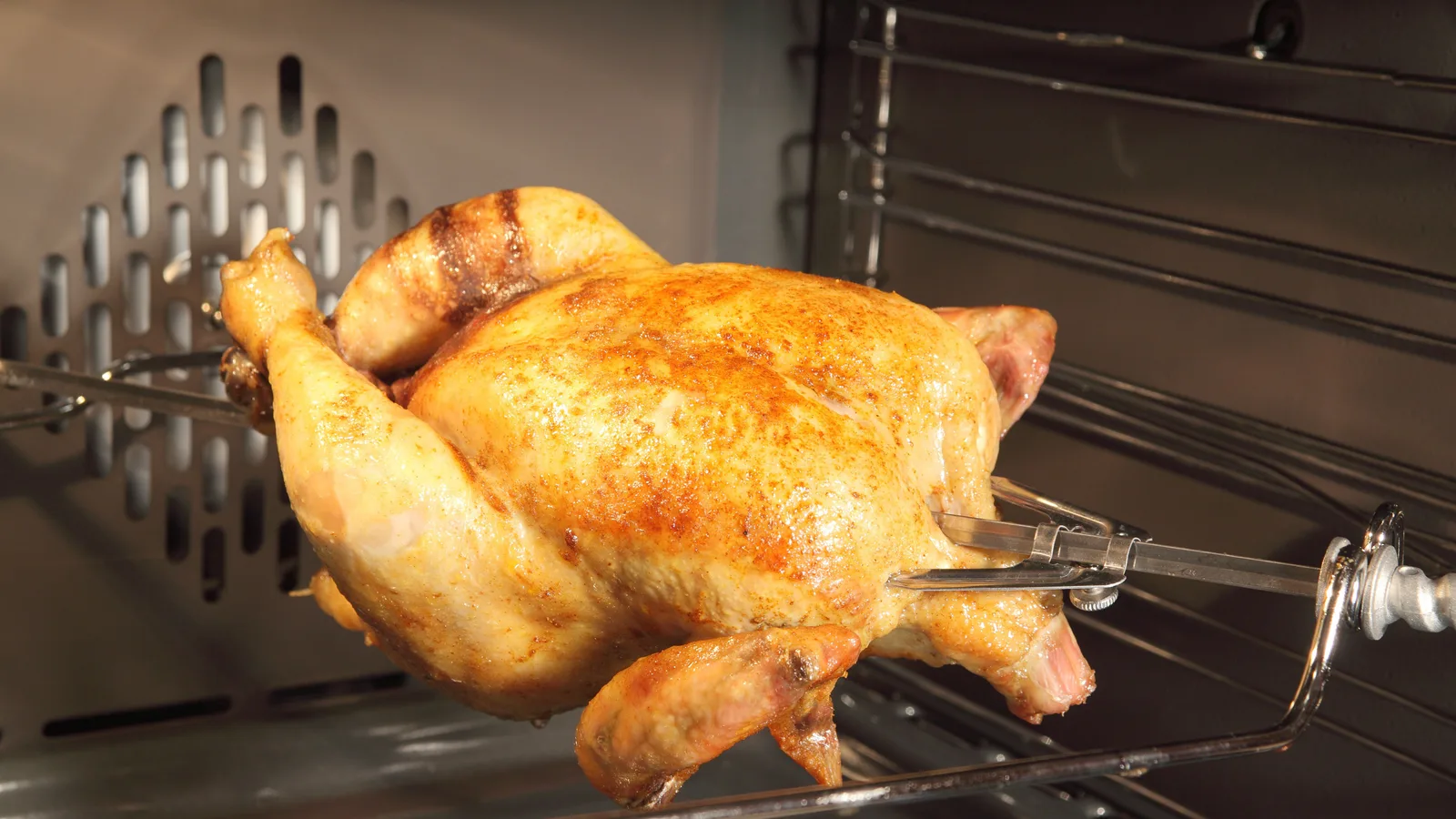
Roasting splits down the middle. A whole chicken fits in a large air fryer and comes out with properly crisp skin, but there's no room for the potatoes. The oven does the whole plate at once, with far less juggling.
Cost, space and cleaning
Upfront, the air fryer is the cheaper purchase. Even a good mid-range model costs a fraction of a new built-in oven, and there's no fitting charge on top. It isn't free to own, though: it claims worktop, needs a socket nearby and has to sit clear of wall units so the vent at the back can breathe.
A built-in oven costs more, but it's already part of the kitchen and gives back every inch of worktop — worth thinking about in a small galley kitchen where the chopping space is already contested.
Cleaning is close, but the air fryer edges it. Most baskets and crisper plates lift out and go in the dishwasher, and there are only two surfaces to deal with. An oven means shelves, trays, side racks and door glass, plus the occasional deep clean.
Pros and cons at a glance
Air fryer: strengths
- Fast for small portions — often quicker than waiting for a fan oven to heat
- Crisper results on chips, wings, breaded fish and roast veg
- Cheaper to buy and less energy-hungry for one- and two-person meals
- Baskets lift out and usually go straight in the dishwasher
Air fryer: watch-outs
- Small capacity means cooking in batches for a family
- Bulky on the worktop and needs space behind for the vent
- Weak at cakes, large bakes and anything needing a wide tin
- Can dry out lean meat if you don't watch the timings
Oven: strengths
- Far more capacity — several dishes at once across two shelves
- Even, reliable baking and roasting
- Uses no worktop space; it's built into the kitchen
- Fan, bake and grill settings in one appliance
Oven: watch-outs
- Slow to heat and wasteful for a single portion
- More surface area to clean
- Replacing one is expensive and usually needs fitting
- Crispness suffers on the lower shelf and at the back corners
Who should buy an air fryer
Choose an air fryer if:
- You cook for one or two most nights and want dinner on the table quickly.
- Chips, wings, roast veg, halloumi and reheated leftovers are your staples.
- You want to cut the energy you spend on small meals.
- You have a spare patch of worktop and a socket within reach.
- You're happy to cook in batches when friends come round.
It's also a sensible buy if your oven is slow, ancient or awkward to heat up for a quick lunch — plenty of people use an air fryer for exactly that and leave the oven for weekends.
Who should stick with an oven
Stick with your oven — and spend the money elsewhere — if:
- You bake: cakes, bread, pastry and puddings need the even heat of a full cavity.
- You cook Sunday roasts with all the trimmings, or regularly feed four or more.
- Your worktop is already full and there's nowhere sensible to put another appliance.
- You want one machine that roasts, bakes, grills and proves.
- You're tight on space in a small flat kitchen.
If the oven still works, there's no urgency to replace it. An air fryer is an addition you'll use often — not a reason to rip out a functioning kitchen.
The final verdict
For most UK kitchens the air fryer is the better buy of the two — but as an addition, not a replacement. It wins on speed, crispness and the cost of cooking small portions, which is what most weekday meals are.
The oven keeps the crown for baking, big roasts and cooking several things at once, and no air fryer on the market changes that. If you already have a working oven, a mid-priced air fryer alongside it covers nearly every job in the kitchen. If you genuinely only have room for one, answer two questions honestly: do you bake, and how many people do you feed? Those two answers settle it.
Frequently asked questions
Can I cook a whole chicken in an air fryer?
Why does my air fryer smoke?
Does food from an air fryer taste the same as from an oven?
Can I use foil or baking paper in an air fryer?
Is an air fryer cheaper to run than an oven?
Related articles

Dunelm vs IKEA 2026: Which Is Better for UK Homes?
Dunelm vs IKEA compared for UK homes: which wins on furniture, curtains, storage and made-to-measure, plus who each shop really suits.
Head-to-Head Comparisons
Gas vs Charcoal Barbecue 2026: Which Should You Buy?
Gas or charcoal? We compare heat control, flavour, running costs, cleaning and safety to name the better barbecue for most UK gardens in 2026.
Head-to-Head Comparisons
Induction Hob vs Gas Hob 2026: Which Should You Buy?
Induction hobs heat faster and wipe clean; gas gives you visible flame control. We compare running costs, safety and cookware to pick a winner.
Head-to-Head Comparisons
Kettle vs Hot Water Dispenser 2026: Which Should You Buy?
We compare kettles and hot water dispensers on speed, running costs, space and safety so you can pick the right one for your kitchen.
Head-to-Head Comparisons
Le Creuset vs Staub 2026: Which Casserole Actually Wins?
Le Creuset and Staub both make enamelled cast-iron casseroles in France. We compare interiors, lids, handles and value to pick a winner for UK kitchens.
Head-to-Head Comparisons