Induction Hob vs Gas Hob 2026: Which Should You Buy?
Induction hobs heat faster and wipe clean; gas gives you visible flame control. We compare running costs, safety and cookware to pick a winner.
Induction vs gas: the short answer
Both hobs put heat under a pan, but they do it in completely different ways — and that difference decides how they cook, how they clean up and what it costs to fit one. If you want the conclusion before the detail, it's below.
Induction hob vs gas hob at a glance
How the two hobs differ on the points that actually decide the choice.
Feature
Induction hob
- Heat source
- A magnetic field that heats the pan base itself; the glass is only a surface to stand pans on
- Responsiveness
- Very fast — the ring changes the moment you turn it down, and holds a low simmer steadily
- Energy transfer
- Roughly 85% of the energy goes into the pan
- Cleaning
- Flat glass, usually one wipe once it has cooled
- Cookware
- Magnetic bases only — test with a fridge magnet
- Safety
- No flame and no gas, but the glass stays hot where a pan has been sitting
- Installation
- Electrician, often a dedicated circuit back to the consumer unit
- Running costs
- Electricity costs more per unit, but nearly all of it reaches the food
- Low-heat control
- Excellent; a gentle simmer holds without fiddling
- Best for
- Busy family kitchens and people who hate scrubbing
Gas hob
- Heat source
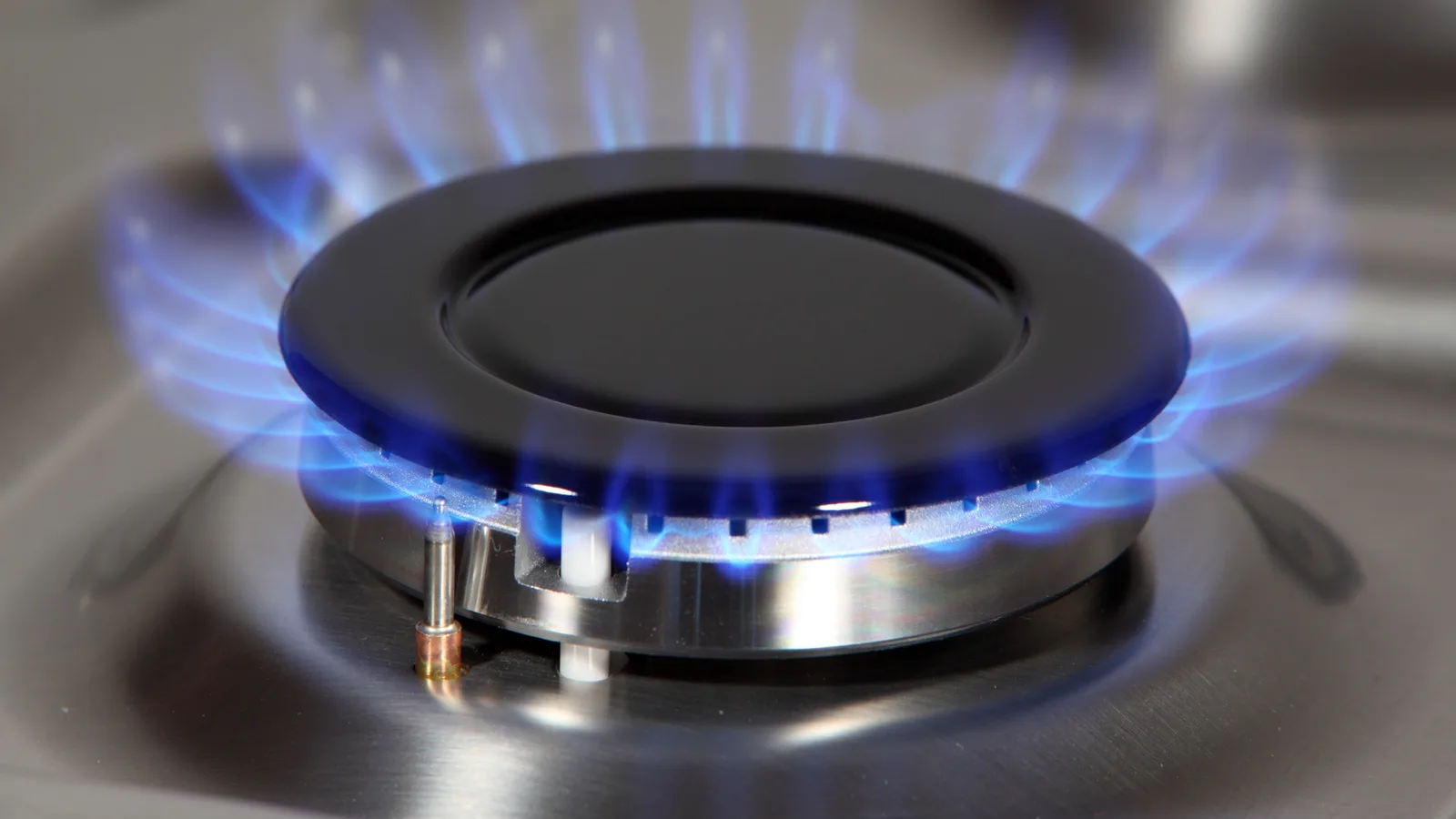
- An open flame that wraps around and up the sides of the pan
- Responsiveness
- Fast, with the flame visible so you can judge the heat by eye
- Energy transfer
- Roughly 40% reaches the pan; the rest warms the room
- Cleaning
- Supports, burner caps and spill tray lift off and need soaking
- Cookware
- Almost anything, including thin aluminium and round-bottomed woks
- Safety
- Open flame, hot handles and knobs, plus gas and carbon monoxide risk if badly fitted
- Installation
- Gas Safe registered engineer, plus adequate ventilation
- Running costs
- Gas is cheaper per unit, but much of the heat escapes past the pan
- Low-heat control
- Good, though a very low flame can struggle under a wide pan
- Best for
- Wok cooking, charring and cooking by sight
How each one heats a pan — and why it matters
An induction hob is an electric hob with a coil under each ring. Switch it on and the coil creates an alternating magnetic field, which induces currents in the base of a ferrous pan. The pan is the element; the glass is only there to be sat on. That is why a ring with no pan on it stays cool, why the surface warms only where it touches a hot pan, and why an aluminium or glass pan simply never heats up.
Gas works the other way round. The heat starts outside the pan and has to travel through the base. The flame wraps the bottom and licks up the sides, and a good share of it escapes past the pan into the kitchen — which is why a gas kitchen needs decent extraction, and why pan handles get hot when the flame is turned up high.
Both types respond quickly. The practical difference is feedback. On gas you watch the flame and adjust by eye. On induction you trust the number on the display, and the pan matters more than the hob: a thin or warped base shows up as a hot spot on induction, where gas would have been more forgiving.
Running costs: cheap gas vs efficient electricity
Gas is the cheaper fuel per kilowatt-hour in the UK, and not by a small margin. But a hob is not a boiler: what matters is how much of that energy ends up in the food. A gas hob delivers roughly 40% of its heat to the pan; induction gets closer to 85%. You pay more per unit for electricity, but you need fewer units to boil the same pan of pasta.
In practice the two often land nearer each other than the fuel prices suggest. Induction's advantage is largest when you simmer a lot on small rings, because almost nothing is wasted. Gas's case is strongest where you already have a gas point and would otherwise pay for a new circuit.
Safety around the hob
Induction's edge is residual heat. Because the pan does the heating, the surface cools soon after the pan comes off — though the glass does get hot where a pan has been, and most hobs show a residual-heat indicator until it's safe to touch. There is no flame to catch a tea towel and no gas connection in the room.
Gas brings an open flame to worktop height. Sleeves, tea towels and wooden spoons all get closer than you'd like, knobs are reachable by small hands, and pan handles heat up on a high flame. Most UK gas hobs now have a flame-failure device that cuts the gas if the flame goes out — worth confirming on any second-hand model — and ventilation matters, because a badly adjusted burner in a sealed room is a carbon monoxide risk.
Cookware, installation and kitchen fit
Before you fall for a hob, check two things: what it needs underneath, and what it will accept on top. Induction narrows your pan drawer; gas narrows your installation options. Both need clearance for the extractor above, and induction also needs a little airflow beneath the worktop, so check the cupboard layout as well as the cut-out.
- The induction pan test
- If a magnet grips the base firmly, the pan will work. If it slides off, it won't.
- Pans that won't work on induction
- Aluminium, copper, most glass and ceramic, and thin stainless steel with no magnetic layer.
- Best base for induction
- Flat and heavy. A warped base makes poor contact and heats unevenly.
- Woks
- A round-bottomed wok sits properly on gas. On induction you need a flat-bottomed wok or a wok ring.
- Electrical supply
- Many full-size induction hobs need their own circuit; some smaller models run from a 13A socket. Check the rating before you buy.
- Gas installation
- In the UK a new gas hob must be fitted by a Gas Safe registered engineer.
Who should choose an induction hob
Induction: the case for it
- Fastest heat of the two, with a ring that responds the instant you change the setting.
- Easier cleaning — a flat glass surface with no caps or supports to soak.
- Less waste heat, so a cooler kitchen and an easier job for the extractor.
- No open flame, no gas connection and no carbon monoxide risk in the kitchen.
- Timers, keep-warm settings and child locks are common on induction and rare on gas.
What you give up
- Some or all of your pans may need replacing.
- Often needs a dedicated circuit, which adds to the fitting bill.
- Coil hum and cooling fans are audible on some models, especially at low settings.
- A power cut means no cooking at all.
Who should choose a gas hob
Gas: the case for it
- A flame you can see, so you judge heat by eye rather than by a number.
- Charring and blistering — peppers, aubergines, tortillas — only really works over a flame.
- Round-bottomed woks sit properly, which matters if you stir-fry often.
- Cheaper fuel per unit, and a simple swap if a gas point is already there.
- Most models can be lit with a match during a power cut.
What you give up
- More cleaning: pan supports, burner caps and spill tray all come apart.
- Waste heat warms the kitchen and puts moisture into the air.
- Open flame and hot handles are a bigger worry with young children.
- Must be fitted by a Gas Safe registered engineer, with proper ventilation.
The final verdict
Induction is the better hob for most UK kitchens. It is quicker, more controllable at low heat, simpler to clean and safer around children, and its efficiency claws back much of gas's cheaper fuel price. The extra cost of a circuit is usually a one-off; the cleaning you avoid is weekly.
Choose gas if the way you cook depends on it: a round-bottomed wok, charred vegetables, a flame you can watch, or a kitchen where the gas point exists and the fuse board has no room to spare. If none of that describes your cooking, induction is the one you'll be glad you bought in five years' time.
Induction vs gas hob: your questions answered
Can I use my existing pans on an induction hob?
Do induction hobs need a special electrical supply?
Is a gas hob cheaper to run than an induction hob?
Are induction hobs noisy?
Can I cook on a gas hob during a power cut?
Do I need a Gas Safe registered engineer to fit a gas hob?
Related articles
Air fryer vs oven 2026: which is better for your kitchen?
Air fryer vs oven compared on speed, capacity, results and running costs. We name the overall winner and explain which one suits your kitchen.
Head-to-Head Comparisons
Dunelm vs IKEA 2026: Which Is Better for UK Homes?
Dunelm vs IKEA compared for UK homes: which wins on furniture, curtains, storage and made-to-measure, plus who each shop really suits.
Head-to-Head Comparisons
Gas vs Charcoal Barbecue 2026: Which Should You Buy?
Gas or charcoal? We compare heat control, flavour, running costs, cleaning and safety to name the better barbecue for most UK gardens in 2026.
Head-to-Head Comparisons
Kettle vs Hot Water Dispenser 2026: Which Should You Buy?
We compare kettles and hot water dispensers on speed, running costs, space and safety so you can pick the right one for your kitchen.
Head-to-Head Comparisons
Le Creuset vs Staub 2026: Which Casserole Actually Wins?
Le Creuset and Staub both make enamelled cast-iron casseroles in France. We compare interiors, lids, handles and value to pick a winner for UK kitchens.
Head-to-Head Comparisons