Gas vs Charcoal Barbecue 2026: Which Should You Buy?
Gas or charcoal? We compare heat control, flavour, running costs, cleaning and safety to name the better barbecue for most UK gardens in 2026.
Gas vs charcoal barbecue: the short answer
Overall winner: gas. A gas barbecue is the better all-round choice for most UK gardens. It lights at the turn of a dial, gives you a steady heat you can adjust while you cook, and leaves you with a grease tray rather than a pile of ash. That convenience matters when a sunny evening arrives without much warning.
Charcoal is not the lesser option. It is the one to choose if smoke flavour, a fierce direct heat and the slower ritual of lighting coals are the reasons you want a barbecue at all. Gas will not give you that, however convenient it is.
The rest of this guide compares the two on heat control, flavour, running costs, cleaning and safety, then sets out who each one genuinely suits.
Gas vs charcoal at a glance
The practical differences are not about which one can cook a good meal. Both can. They are about how much attention the cooking asks of you, and what you want the finished food to taste like.
The practical differences, with the stronger option noted in each row
What matters
Gas
- Ready to cook — gas wins
- Light the burners and the grate is hot while you fetch the food.
- Heat control — gas wins
- A dial per burner; turn it down for fish or up for a steak.
- Smoke flavour — charcoal wins
- Clean heat; wood chips in a smoker box add a little smoke.
- Searing and char — charcoal wins
- Hot, but usually spread across the grate; a sear burner helps if fitted.
- Cleaning — gas wins
- Brush the grates, empty the grease tray, wipe the outside.
- Fuel storage — gas wins
- A cylinder takes up space and must stand upright in a ventilated spot, never indoors.
- Cost per cook — depends
- Cylinder refills cost money, and longer cooks use more gas.
- Occasion cooking — charcoal wins
- Easy for a crowd because you can keep cooking while people arrive.
Charcoal barbecue
- Ready to cook — gas wins
- Needs coals lit and left until they are covered in ash; a chimney starter shortens the wait.
- Heat control — gas wins
- Vents and coal layout control heat, and small adjustments take longer.
- Smoke flavour — charcoal wins
- Coals and dripping fat create smoke; the flavour is the main reason people choose it.
- Searing and char — charcoal wins
- A pile of glowing coals gives an intense, localised heat for a dark crust.
- Cleaning — gas wins
- Brush the grates and deal with ash once it is completely cold.
- Fuel storage — gas wins
- Bags or bins of fuel are easy to store dry but bulky.
- Cost per cook — depends
- A bag of charcoal goes a long way on short cooks, but low-and-slow sessions burn through it.
- Occasion cooking — charcoal wins
- The lighting and tending become part of the event; less suited to a rushed supper.
Convenience and heat control: gas wins
The gap is not really about cooking power. It is about how often you will use the thing. A gas barbecue asks almost nothing of you: open the valve, turn a dial, wait for the grate to heat, cook. If the weather turns or the children need you, you can turn it down and come back.
Charcoal demands a sequence. You need enough fuel, a safe place to light it, and time for the coals to stop flaming and start glowing. Once they are ready, you manage them by spreading or banking them and adjusting the vents. That is satisfying when you have the time and frustrating when you do not.
Gas also wins on repeatability. A dial setting gives you a similar heat on a windy evening and a still one, within reason. Charcoal responds to wind, fuel quality and how long the coals have been burning. For a household that wants supper on the table without a performance, gas is the easier tool.
Flavour and the cooking experience: charcoal wins
Charcoal wins on flavour, and it is not a small margin for people who care. Fat dripping onto hot coals creates smoke that settles on the food; wood chunks added to the fire deepen it. Gas can mimic some of that with a smoker box or a foil pouch of chips, but the effect is milder and needs deliberate effort.
Charcoal also wins on the pleasure of the process. Lighting a chimney starter, watching the coals catch and arranging a direct and indirect zone is part of the meal for many cooks. It slows you down in a good way. Gas is an appliance; charcoal is a hobby as much as a cooking method.
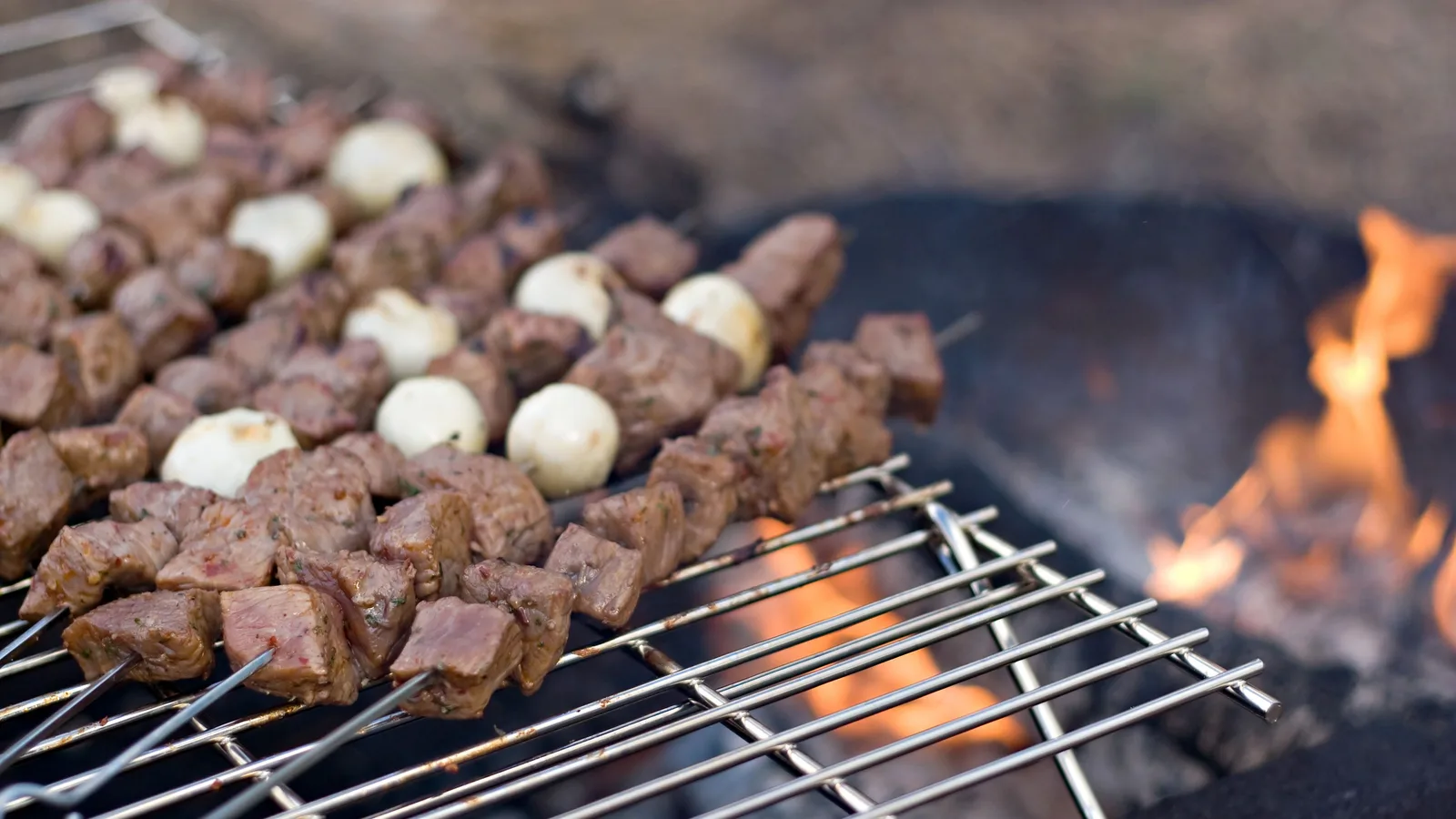
Where charcoal clearly wins for texture is a hard, fast sear. A pile of glowing coals can give a steak or a skewer a dark crust and a smoky edge that a domestic gas grate struggles to match without a dedicated sear zone.
Running costs: it depends how you cook
Neither fuel is automatically cheaper. Bottled gas is bought as a cylinder refill; charcoal is bought by the bag. A short cook for two uses very little of either, while a long, lid-down session with a crowd burns more. The honest answer is to price both locally and think about the way you actually cook.
Gas has a fixed cost you cannot avoid: the cylinder itself, plus refills. Charcoal can look cheaper to start with, but a big bag disappears quickly if you light a full chimney for a couple of sausages. If you cook often and briefly, gas usually makes more sense. If you cook less often and enjoy a long session, the fuel cost is part of the occasion.
Cleaning, maintenance and safety
Gas wins on cleaning. There is no ash to scoop, and most of the mess lands in a grease tray that lifts out. You still need to brush the grates and clean the body, but the job is quicker and less dirty.
Charcoal leaves ash, and ash is messy. It also stays hot for a long time, so you cannot simply tip it out after cooking. Wait until it is completely cold, then bag it and bin it. Never put warm ash into a plastic bin.
Maintenance is a close call. Gas needs its hose, regulator and burners checked; a spider or grease in a burner tube can spoil the flame. Charcoal needs keeping dry and its grates oiled; a kettle left out in the rain will rust at the vents and legs eventually.
Who should choose a gas barbecue?
Choose gas if:
- You cook on weeknights and want the shortest path from garden to plate.
- You have a family or a mix of dietary preferences and need to cook several things at different heats.
- You want to entertain without spending the evening with your back to guests.
- You have a small patio and want a contained, low-mess setup.
- You want to cook with the lid down and rely on a steady temperature.
A gas barbecue is also the better choice if you are buying your first barbecue and do not want to learn fire management before you can cook a decent meal. The trade-off is flavour: you will not get the same smoke unless you work at it.
Who should choose a charcoal barbecue?
Choose charcoal if:
- You want the deepest smoke flavour and do not mind tending coals.
- You cook at weekends and enjoy the lighting ritual.
- You want a very hot direct sear for steaks, skewers or flatbreads.
- You want to try low-and-slow cooking and are willing to learn vent control.
- You have a safe, ventilated spot and somewhere to put a hot barbecue.
Charcoal is also the more forgiving choice for anyone who wants to cook over fire rather than in a gas oven. It is not difficult; it simply asks for attention. If you like the sound of that, you will resent gas for taking it away.
The final verdict
Gas is the overall winner because it removes the reasons not to barbecue. It is quicker to start, easier to control and simpler to clean, and those advantages show up on ordinary evenings, not just at a party. For most UK households, that makes it the better buy.
Charcoal is the better buy for the cook who wants smoke, char and the ritual, and who will use it often enough to justify the extra work. Choose charcoal with your eyes open: it is not a worse barbecue, it is a different hobby. Choose gas if you want dinner.
One last piece of advice: buy the size and shape that fit your garden and the number of people you usually feed, not the one with the most features. Both fuels can produce excellent food; the difference is in how much effort you want to spend getting there.
Common questions about gas and charcoal barbecues
Can you use wood chips on a gas barbecue?
Do you need a chimney starter for charcoal?
Is a gas barbecue allowed on a balcony?
Which is easier for a beginner, gas or charcoal?
Can you cook a roast in a charcoal barbecue?
Related articles
Air fryer vs oven 2026: which is better for your kitchen?
Air fryer vs oven compared on speed, capacity, results and running costs. We name the overall winner and explain which one suits your kitchen.
Head-to-Head Comparisons
Dunelm vs IKEA 2026: Which Is Better for UK Homes?
Dunelm vs IKEA compared for UK homes: which wins on furniture, curtains, storage and made-to-measure, plus who each shop really suits.
Head-to-Head Comparisons
Induction Hob vs Gas Hob 2026: Which Should You Buy?
Induction hobs heat faster and wipe clean; gas gives you visible flame control. We compare running costs, safety and cookware to pick a winner.
Head-to-Head Comparisons
Kettle vs Hot Water Dispenser 2026: Which Should You Buy?
We compare kettles and hot water dispensers on speed, running costs, space and safety so you can pick the right one for your kitchen.
Head-to-Head Comparisons
Le Creuset vs Staub 2026: Which Casserole Actually Wins?
Le Creuset and Staub both make enamelled cast-iron casseroles in France. We compare interiors, lids, handles and value to pick a winner for UK kitchens.
Head-to-Head Comparisons